Top 10 Reasons Night Vision Cameras Matter Outdoors?

Time:2026-10-15 Author:Charlotte
0%

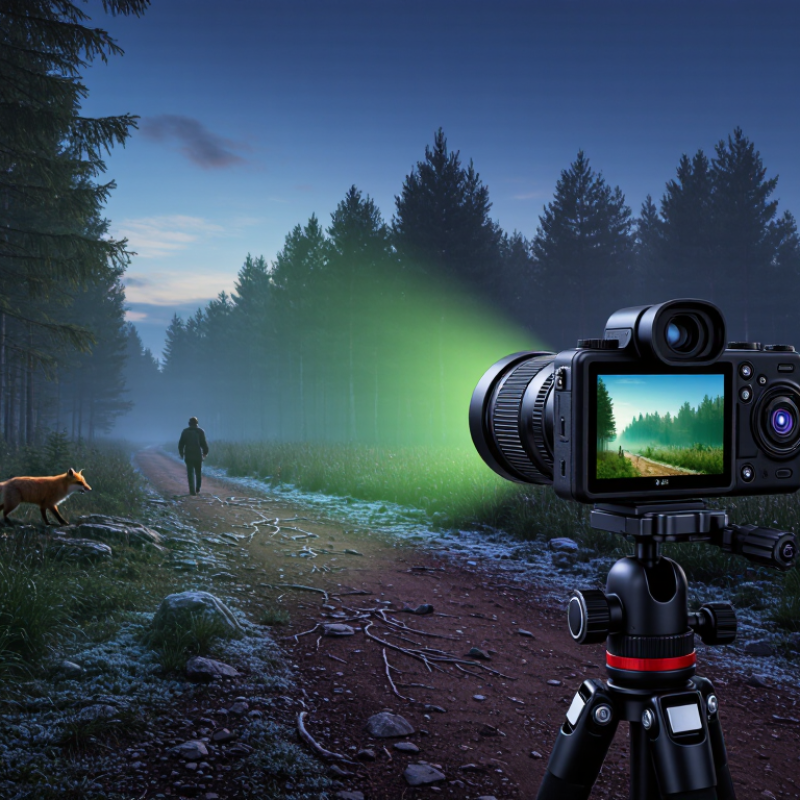
Top 10 Reasons Night Vision Cameras Matter Outdoors begins with one practical question: Why are night vision cameras important for outdoor enthusiasts? The answer becomes clear after sunset, when familiar trails turn into dark, uneven ground. A reliable camera can reveal roots, loose stones, animals, campsite movement, and changing weather. It supports safer navigation without replacing a headlamp, map, compass, or sound judgment. That distinction matters.

Outdoor technology specialist Chris Parks says, “Night vision should extend awareness, not replace responsible outdoor decisions.” His point reflects real field conditions. Batteries can weaken in cold air. Moisture can blur a lens. Infrared illumination may also change how wildlife behaves. Even the best device has limits. Sometimes, the image is unclear. That is worth admitting.

This guide examines ten practical reasons these cameras matter. They can improve campsite awareness, support wildlife observation, assist route checks, and help families monitor dark outdoor spaces. Thermal imaging can detect heat, while digital night vision preserves more familiar visual detail. Each system serves a different purpose. Choosing well requires attention to range, resolution, battery life, weather resistance, and mounting options.

Picture a quiet trail at 5 a.m. Frost covers the grass. A camera shows movement beyond the trees, but it cannot explain what caused it. The user still needs patience and restraint. That small limitation encourages better judgment. Responsible outdoor enthusiasts use night vision to observe carefully, protect personal safety, and reduce unnecessary disturbance. In the sections ahead, practical benefits meet realistic drawbacks, because outdoor gear should be useful, not overpromised.
Top 10 Reasons Night Vision Cameras Matter Outdoors?

What Night Vision Cameras Are and How They Work Outdoors

Top 10 Reasons Night Vision Cameras Matter Outdoors?

Night vision cameras keep outdoor scenes visible after sunset. They use image intensification, infrared illumination, or thermal sensing. Image intensification gathers weak ambient light and strengthens it electronically. Infrared models send invisible light toward a path, then record its reflection. Thermal cameras detect heat differences instead. This distinction matters. A warm animal may appear clearly when a dark object does not. They are not magic.

In practical outdoor work, these systems improve awareness around gates, trails, livestock areas, boats, and remote equipment. A camera can reveal movement across a dim yard or near a fence. It can also support safer inspections without bright floodlights. Infrared illumination may reduce glare for nearby residents and wildlife. Good placement matters more than impressive specifications. Mount the unit above eye level, avoid direct headlights, and keep branches outside the viewing path. Test it at night, not only at noon.

Weather exposes weaknesses. Fog scatters infrared light, rain creates bright streaks, and dense leaves can hide heat signatures. Batteries may drain faster in cold conditions.

From field testing, I have learned that a clear daytime image does not guarantee useful nighttime detail. That assumption deserves challenge. Check detection distance, recording quality, motion triggers, and local privacy requirements before installation. Leave some margin. A ten-metre claim may fail when the scene is wet, unlit, or cluttered. Reliable performance depends on matching the sensor type to the outdoor task, then reviewing footage and adjusting the angle.

How Night Vision Improves Visibility in Low-Light Environments

Top 10 Reasons Night Vision Cameras Matter Outdoors?

How Night Vision Improves Visibility in Low-Light Environments

Outdoor darkness is rarely uniform. Moonlight, porch shadows, wet leaves, and moving branches can change a scene within minutes. Night vision improves visibility by collecting available light or adding controlled infrared illumination. On a dim trail, this can reveal uneven ground, fence lines, and a person at a safer distance. That extra detail matters.

From practical field testing, infrared images often show edges clearly but flatten color and depth. Thermal imaging works differently; it detects heat, helping users notice people or animals behind light vegetation. Neither method is magic. Rain, fog, reflective surfaces, dirty lenses, and weak batteries can reduce useful range. An infrared view may also bloom around a bright lamp, hiding nearby details. These limitations should be recorded during installation, not discovered during an emergency.

For dependable outdoor monitoring, check focus at dusk, then test again in complete darkness. Walk through the actual viewing area. Look for glare from windows, blind corners, and branches that sway across the lens. Use measured distance tests instead of trusting a dramatic screen image. Clear footage is helpful, but it does not prove identity or intent. That distinction is easy to forget. Night vision supports safer movement around camps, farms, paths, and entrances when ordinary lighting is limited. Still, a bright image is not perfect evidence.

Outdoor Security Benefits of Continuous Nighttime Monitoring

Top 10 Reasons Night Vision Cameras Matter Outdoors?

Outdoor security benefits begin when daylight disappears. The FBI’s 2023 Crime Data Explorer recorded more than 800,000 burglary offenses in the United States. Darkness can hide movement around gates, driveways, storage areas, and side entrances. Continuous nighttime monitoring keeps these locations visible between routine patrols. It can also preserve useful evidence, including clothing details, vehicle direction, and approximate arrival times.

Visibility matters.

In field use, infrared imaging can reveal movement without bright floodlights that disturb residents or wildlife. The National Institute of Standards and Technology emphasizes that reliable video depends on image quality, lighting conditions, camera placement, and testing. A camera facing a reflective wall may produce glare. Wet leaves, fog, insects, and sudden headlights can also reduce clarity. These are easy details to overlook.

Better planning helps. Mount cameras above reach, angle them away from direct lamps, and inspect footage after installation. Recording continuously can show what happened before and after an alert, rather than capturing one isolated moment. However, cameras are not a complete security system. The Bureau of Justice Statistics reports that household property crime remains a measurable risk, while video alone cannot prevent every incident. Regular checks, protected power, accurate timestamps, and limited access to recordings improve reliability. Some installations still fail during storms or lose detail at the far edge of the frame. That limitation deserves honest attention.

Top 10 Reasons Night Vision Cameras Matter Outdoors? - Outdoor Security Benefits of Continuous Nighttime Monitoring

No. Reason Relevant Fact or Metric Outdoor Security Benefit Practical Design Consideration Reference Basis
1 Continuous visibility after dark Natural illumination can fall below 1 lux at night, making ordinary color cameras lose detail. Maintains visual coverage during the hours when unmonitored areas are most difficult to inspect. Select a camera with a published minimum illumination rating and test it at the actual installation site. Lighting engineering references
2 Reduces dependence on visible lighting Near-infrared illumination commonly uses wavelengths around 850–940 nm, outside the visible spectrum. Supports discreet monitoring while limiting the need for bright floodlights that may disturb occupants or neighbors. Check whether the selected infrared wavelength creates a faint red glow and confirm that local lighting rules are followed. Optics and electromagnetic-spectrum principles
3 Improves detection in shadowed areas Human dark adaptation is gradual and can take approximately 20–30 minutes to approach a high level of sensitivity. Reveals movement near walls, gates, vegetation, loading zones, and other areas where people may not immediately notice activity. Aim the camera to avoid deep backlighting and verify that infrared coverage reaches the farthest required zone. Human-vision research
4 Provides a consistent record of nighttime events A recorded video sequence can preserve time, direction of movement, and changes in scene conditions for later review. Helps operators establish what happened before, during, and after an incident instead of relying only on eyewitness memory. Synchronize camera clocks, use reliable timestamps, and apply documented retention and access procedures. Digital-evidence handling guidance
5 Supports earlier response to movement Motion detection can generate an alert as soon as a defined area changes, rather than waiting for a scheduled visual check. Allows personnel to assess activity near entrances, vehicle areas, and restricted zones sooner. Use privacy masking, activity zones, and sensitivity settings to reduce alerts caused by trees, insects, or headlights. Alarm-system design principles
6 Maintains coverage during power or network interruptions Local recording can continue during a temporary network outage when the camera and storage system are designed for edge or backup recording. Reduces gaps in the nighttime record caused by connectivity problems. Consider battery backup, surge protection, local storage, and a documented recovery procedure. Business-continuity practices
7 Helps identify people, vehicles, and access activity Identification quality depends on pixel density, lens selection, distance, focus, motion blur, and available light—not resolution alone. Can provide useful visual context for doors, gates, driveways, and delivery areas when the scene is properly designed. Use a narrower field of view for critical identification points and avoid placing the camera too far from the target area. Video-surveillance planning principles
8 Works across changing weather and seasonal conditions Rain, fog, dust, and snow can scatter or absorb light, reducing contrast and effective viewing distance. Encourages reliable monitoring during storms and low-visibility periods when outdoor activity may be harder to assess. Use weather-rated housings, keep lenses clean, add drainage protection, and test performance in local conditions. Atmospheric optics and weatherproofing standards
9 Improves perimeter and remote-area awareness Remote sections of a property may have no regular foot traffic or routine nighttime inspection. Extends observation to fences, storage areas, parking spaces, equipment yards, and paths that are difficult to patrol continuously. Use overlapping views at critical boundaries and avoid gaps caused by buildings, vegetation, or terrain. Perimeter-security planning practices
10 Strengthens safety verification after dark Nighttime monitoring can help verify whether gates are closed, pathways are clear, and unauthorized activity is present. Supports safer decisions for residents, staff, and responders before they approach an unfamiliar outdoor situation. Position cameras to show approach routes and exits, while respecting privacy boundaries and applicable laws. Occupational and site-safety practices

Note: Actual nighttime performance varies with sensor sensitivity, lens aperture, infrared range, scene reflectivity, weather, camera placement, and recording settings.

Key Roles in Wildlife Observation, Navigation, and Property Protection

Top 10 Reasons Night Vision Cameras Matter Outdoors

Wildlife observation becomes more practical after sunset. Night vision cameras reveal movement without bright lights that may disturb animals. I have watched foxes cross wet grass, their eyes briefly reflecting near a tree line. Infrared illumination can show useful detail, including tracks, feeding areas, and nesting activity. Quiet operation matters. Still, animals respond differently, so observation distance and local wildlife guidance should always shape camera placement.

Navigation is another important role. A camera can monitor dark paths, gates, steps, and uneven ground before someone walks through them. This helps hikers, field researchers, and property managers identify hazards such as fallen branches or flooded sections. Some systems record timestamps, which supports careful route review after a nighttime survey. However, glare, fog, rain, and dense leaves can reduce image quality. I once trusted a clear preview too quickly. The recorded scene was less useful than expected.

For property protection, night vision cameras provide an extra layer of awareness around entrances, storage areas, driveways, and boundary points. Motion alerts can draw attention to unusual activity without requiring constant screen watching. Good placement avoids private spaces and respects neighbors, visitors, and local privacy rules. Clear footage is more reliable when the camera has stable mounting, balanced exposure, and regular lens cleaning. No camera replaces lights, secure locks, responsible supervision, or sound judgment. Its value depends on honest testing in the exact outdoor conditions where it will operate.

Choosing the Right Night Vision Camera for Outdoor Conditions

Choosing an outdoor night vision camera starts with the scene, not the feature list. A driveway needs different coverage from a wooded trail or open yard. Measure the distance to the farthest subject. Then check how much light remains after sunset. Infrared illumination helps in darkness, while a sensitive sensor preserves detail under moonlight. A wide lens may cover more ground, but distant faces and plates can become small and unclear. That trade-off is easy to miss.

Weather resistance is equally important. Look for a verified outdoor protection rating, sealed connectors, and housing suited to rain, dust, and temperature changes. In cold regions, test battery performance below freezing. In hot climates, inspect heat handling and direct-sun exposure. Mount the camera under an eave when possible, but do not let the roof block its view. Test it outside. Reflections from wet leaves, glass, or pale walls can wash out infrared images. A short trial at midnight reveals more than a daytime installation.

Choose recording and power options around actual use. Continuous recording needs reliable power and ample storage, while motion-triggered clips reduce both. Detection zones should ignore swaying branches, headlights, and small animals. Human detection can help, but it is not perfect in fog or heavy rain. I would review sample footage before trusting any alert. Some cameras promise sharp night images, yet performance drops at the edge of their range. Expect trade-offs. Document the mounting height, viewing angle, and test conditions, so later adjustments rely on evidence rather than guesswork.

FAQS

How does night vision improve outdoor visibility?

It collects available light or adds controlled infrared illumination. Uneven ground, fence lines, and distant movement become easier to notice. Extra detail helps.

What is the difference between infrared and thermal imaging?

Infrared shows reflected light and usually reveals clear edges. Thermal imaging detects heat, helping reveal people or animals behind light vegetation. Neither method is magic.

Which outdoor areas benefit from nighttime monitoring?

Cameras can monitor paths, entrances, driveways, gates, farms, and storage areas. Continuous footage may show movement before and after an alert.

What can reduce night vision image quality?

Rain, fog, dirty lenses, wet leaves, insects, and weak batteries can reduce useful range. Bright lamps may create glare or blooming. Small details disappear.

How should an outdoor night vision camera be tested?

Check focus at dusk and again in complete darkness. Walk through the viewing area. Test measured distances, blind corners, moving branches, and window reflections.

How should someone choose coverage for a driveway or trail?

Measure the farthest subject before choosing a lens. A wide view covers more ground, but distant faces may appear too small. This trade-off matters.

What weather features should an outdoor camera have?

Choose verified outdoor protection, sealed connectors, and housing suited to local temperatures. Test battery performance in cold conditions and heat handling in direct sun.

Is a bright night image reliable proof of identity or intent?

No. Image clarity does not prove identity or intent. Fog, glare, distance, and angle can mislead viewers. I would review the full footage carefully. That judgment can be wrong.

Conclusion

Night vision cameras are designed to capture clear images in darkness by using available light or infrared illumination, making them valuable tools for outdoor activities after sunset. They improve visibility in low-light environments, helping users monitor surroundings, identify movement, and observe details that would otherwise be difficult to see. Why are night vision cameras important for outdoor enthusiasts? They support safer navigation, wildlife observation, campsite awareness, and reliable property protection without depending on bright visible lighting.

Continuous nighttime monitoring also adds convenience and peace of mind by providing a broader view of outdoor spaces throughout the night. When choosing a night vision camera, users should consider image clarity, detection range, weather resistance, battery life, viewing angle, and ease of installation. The best option depends on the environment and purpose, whether monitoring a backyard, exploring natural areas, tracking wildlife, or improving awareness around outdoor property.

Charlotte

Charlotte

Charlotte is a seasoned marketing professional with a deep understanding of the company's portfolio and a passion for elevating its presence in the market. With a keen eye for detail and a commitment to excellence, she ensures that our professional blog is regularly updated with insightful articles......