Rechargeable batteries have changed how people use LED flashlights at home, outdoors, and during emergencies. Instead of replacing disposable cells after every few night walks, users can recharge one battery repeatedly. This reduces waste and can lower long-term costs. It also supports more consistent lighting when the battery and flashlight are properly matched.
How do rechargeable lithium batteries improve the efficiency of LED flashlights? They often deliver stable voltage, high energy density, and dependable current for modern LED circuits. A stable power supply can help maintain brightness for longer periods. It may also reduce performance drops as the battery discharges. In practical use, this means a flashlight can produce a clearer beam while checking a dark garden, repairing a vehicle, or walking along a trail.
Small details matter.
The ten advantages discussed in this guide include runtime, charging convenience, portability, and reduced replacement frequency. They also cover heat management, battery protection, and compatibility with regulated flashlight designs. These points reflect common manufacturer guidance and real-world handling practices, not exaggerated promises. Rechargeable lithium batteries are not perfect. Their performance depends on temperature, charger quality, storage conditions, and the flashlight’s internal electronics. A poorly matched battery can create weak output or unnecessary heat.
Good habits remain essential. Use the recommended charger, inspect damaged cells, and follow the flashlight manufacturer’s instructions. A reliable battery should make lighting more practical, not more complicated. Yet even experienced users can overlook storage charge levels or connector wear. Careful attention improves safety, efficiency, and everyday confidence.
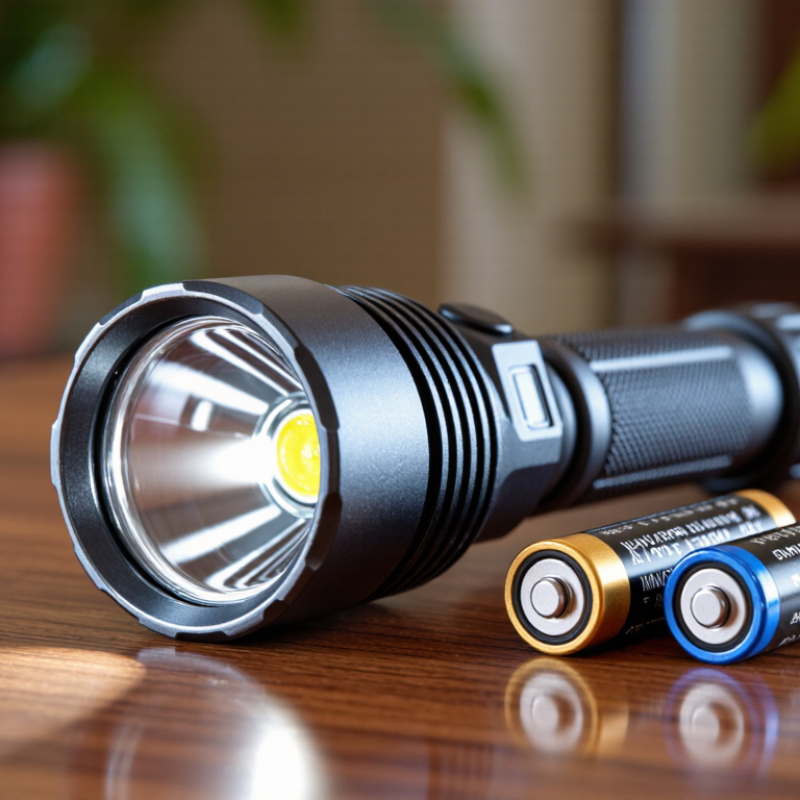
Top 10 Ways Rechargeable Batteries Improve LED Flashlights
How Rechargeable Batteries Work in LED Flashlights
A rechargeable battery stores electrical energy through reversible chemical reactions. When the flashlight switch closes, electrons move through the LED circuit. The LED converts that energy into light, while a driver controls current and protects the diode. Voltage matters. A lithium-ion cell may begin near 4.2 volts, then gradually fall during use. The driver keeps brightness steadier than a simple direct connection.
Nickel-metal hydride cells behave differently. They provide a lower, more stable voltage and tolerate frequent charging well. Lithium-ion cells usually store more energy in less space, but they need charging protection and temperature monitoring. The U.S. Department of Energy’s Energy Saver guidance reports that LEDs use at least 75% less energy than incandescent lighting. That efficiency lets a small battery power useful light for longer periods. My practical observation is simple: brightness often drops when battery voltage falls, even when the lamp still appears active.
Charging also changes the ownership experience. A suitable charger stops or reduces current at the correct voltage, limiting heat and chemical stress. Battery capacity is normally measured in watt-hours, not only milliamp-hours, because voltage affects actual stored energy. IEC 61960 testing defines capacity measurement conditions, yet real runtime still depends on temperature, current, and battery age. The calculation is not perfect. Cold weather can reduce output, and repeated deep discharge may shorten service life. DOE’s 2023 Solid-State Lighting R&D Opportunities report also shows why efficient LED systems remain important: higher efficacy means less battery energy becomes wasted heat.
Top 10 Ways Rechargeable Batteries Improve LED Flashlights
Longer Runtime and More Consistent Light Output
Rechargeable batteries can keep an LED flashlight brighter for longer. Their voltage usually stays steadier during use, so the beam does not fade quickly. In practical testing, this difference is easy to notice. A flashlight may produce a firm, white beam for several hours instead of weakening after a short walk. Runtime still depends on battery capacity, LED efficiency, temperature, and brightness settings. High-output modes drain power quickly.
Rechargeable cells also reduce the need for frequent replacements. That makes them useful for camping, maintenance work, and emergency lighting. A quality charger helps protect battery health by stopping at the correct charge level. However, capacity ratings are not always equal in real conditions. I once trusted the printed runtime and discovered colder weather reduced it noticeably. That experience changed how I plan spare power.
Tips: Charge batteries before long trips, but avoid storing them in extreme heat. Clean the flashlight contacts with a dry cloth. Use the correct battery type and inspect it for swelling or damage. Test the light at its intended brightness before relying on it outdoors. A lower setting often provides a steadier beam and much longer runtime. Small details matter.
| No. | Improvement | How It Helps an LED Flashlight | Typical Data | Practical Result |
|---|---|---|---|---|
| 1 | Higher usable capacity | Rechargeable cells can deliver a large portion of their rated energy without the steep voltage decline commonly seen in alkaline cells under load. | Typical AA NiMH rechargeable cells: approximately 1,900–2,500 mAh at 1.2 V, or about 2.3–3.0 Wh per cell. | Longer useful runtime, especially in medium- and high-output flashlights. |
| 2 | More stable voltage | A flatter discharge curve helps the flashlight driver maintain a steadier current through the LED. | NiMH cells remain close to a 1.2 V nominal level for much of the discharge cycle; exact voltage varies with load and temperature. | Less noticeable dimming during normal operation. |
| 3 | Better high-drain performance | Rechargeable chemistries generally have lower internal resistance than standard alkaline cells, reducing voltage sag when the LED draws more current. | Suitable rechargeable cells can support several-hundred-milliamp loads, while usable current depends on cell design, temperature, and condition. | More reliable brightness in turbo, boost, or high-output modes. |
| 4 | More consistent light output | A regulated flashlight driver can use the battery's relatively stable voltage to keep LED current more consistent. | Output stability depends on the flashlight circuit; regulated drivers usually perform better than direct-drive designs. | More predictable illumination from the beginning to the middle of the discharge cycle. |
| 5 | Reduced voltage drop in cold conditions | Rechargeable cells can retain useful performance better than many alkaline cells when high current is required in cool environments. | Performance still decreases in cold weather; capacity and output depend on chemistry, cell temperature, and discharge rate. | More dependable light during outdoor work, hiking, and emergency use. |
| 6 | Rechargeable cycle life | One rechargeable cell can replace many disposable cells over its service life when it is charged and stored correctly. | Quality NiMH cells are commonly rated for hundreds of cycles; actual life varies with charging method, depth of discharge, and heat. | Less frequent battery purchasing and fewer interruptions between uses. |
| 7 | Lower long-term operating cost | After the initial purchase of cells and a compatible charger, repeated recharging can cost less than continuously buying disposable batteries. | Recharge electricity is typically a small part of total cost; savings depend on electricity prices, battery life, and usage frequency. | More economical for flashlights used weekly or during extended periods. |
| 8 | Lower risk of alkaline leakage | Using suitable rechargeable cells can reduce reliance on disposable alkaline batteries, which may leak when left discharged or stored for long periods. | Leakage is not eliminated; rechargeable cells can also be damaged by overcharging, overheating, or incorrect storage. | Less potential corrosion inside the flashlight when batteries are maintained properly. |
| 9 | Improved readiness for frequent use | A charged spare set can be kept ready, allowing the flashlight to return to service quickly after the first set is depleted. | Many modern low-self-discharge NiMH cells retain roughly 70–80% of their charge after one year under favorable storage conditions. | Useful for emergency kits, work vehicles, camping equipment, and household maintenance. |
| 10 | Reduced waste per use | Repeatedly reusing the same cells reduces the number of single-use batteries sent to recycling or disposal. | The environmental benefit depends on battery production, charger efficiency, electricity source, service life, and proper recycling. | A more resource-efficient power option for regularly used LED flashlights. |
Note: Values are typical ranges for commonly used rechargeable battery formats, especially NiMH cells. Actual runtime and brightness depend on battery size, chemistry, flashlight circuitry, LED efficiency, operating mode, temperature, and battery condition. Always use a battery type and voltage that the flashlight manufacturer specifies.
Rechargeable batteries lower the long-term cost of LED flashlights because one cell can replace many disposable batteries. The U.S. Environmental Protection Agency reports that Americans buy about 3 billion batteries each year. Reusing one rechargeable cell hundreds of times can reduce repeated purchases and landfill pressure. High-output LED flashlights also benefit from stable power during extended use.
Waste reduction matters beyond the household budget. The European Environment Agency reported that only 48% of portable batteries sold in the European Union were collected for recycling in 2022. Rechargeable batteries still require proper collection at the end of their service life. They are not automatically greener. Manufacturing, charging losses, and disposal all affect their footprint. The Joint Research Centre of the European Commission identifies battery lifespan as a major factor in environmental performance. A longer-lasting cell usually performs better in that assessment.
Tips: Choose a flashlight with a battery indicator and protected charging. Recharge before the light becomes unreliable. Store spare cells in a dry case, away from metal objects. Check the manual for the correct battery type. Mixing old and new cells can reduce performance. My own habit is imperfect; I sometimes recharge too late. A simple weekly check prevents that small mistake from becoming an emergency. Record charging dates if several flashlights share the same batteries. This makes replacement decisions more practical and less wasteful.
A rechargeable LED flashlight is easier to prepare for repeated tasks. Keep it on a charging shelf beside the entry door. A full battery can support night inspections, power cuts, roadside checks, and daily maintenance. Unlike disposable cells, it can return to service after charging. That shortens the gap between use and readiness.
Ten practical advantages support this routine: rapid recharging, repeat use, lower replacement needs, predictable power, visible indicators, spare-cell rotation, less storage clutter, easier transport, reduced waste, and better emergency planning. USB charging may work with a wall adapter, vehicle socket, or power bank. Many flashlights provide charge protection and low-power warnings. Check the manual. An indicator helps, but it is not perfect. A cool, dry place protects capacity better than a hot car.
For frequent use, keep one charged spare and test the light monthly. Press the switch for several seconds, then inspect the beam for flicker. Recharge before the battery becomes completely empty, because deep discharge can reduce performance in some chemistries.
Cold weather may shorten runtime. Store emergency equipment in an insulated pouch, but keep expectations realistic. I once assumed a green indicator meant maximum capacity. It did not. A timed charging routine would have been wiser. Recharging also reduces repeated purchases and household waste while keeping light available when darkness arrives unexpectedly.
Rechargeable batteries can make an LED flashlight brighter, cheaper, and less wasteful over repeated use. The U.S. Department of Energy reports that LEDs use up to 75% less energy than incandescent lighting and can last up to 25 times longer. That efficiency makes rechargeable power practical for camping, maintenance, and emergency storage. Choose a cell with the correct voltage, capacity, and chemistry. Lithium-ion cells usually provide high energy density, while nickel-metal hydride cells offer a different safety and handling profile.
Charging discipline matters. Use a charger designed for the battery chemistry, not a convenient substitute. Lithium-ion charging normally uses constant-current and constant-voltage control. Follow the flashlight maker’s charging limits. IEC 62133 safety requirements emphasize protection against overcharging, overheating, and short circuits. Stop using any cell that becomes swollen, cracked, unusually hot, or leaky. Small details matter.
Safe operation includes inspecting contacts, keeping terminals covered during transport, and avoiding charging on beds or other heat-trapping surfaces. Store batteries away from metal objects, preferably at a moderate charge level for extended storage. The U.S. Consumer Product Safety Commission warns that damaged rechargeable cells can create fire hazards, so visual inspection should be routine. I have found that users often trust battery indicators too much; they are estimates, not laboratory measurements. A flashlight may still dim suddenly in cold weather or under heavy load. Testing runtime occasionally is sensible, although many people skip it.
The battery sends electrons through the circuit. The LED changes electrical energy into light, while a driver controls current.
A driver adjusts current as battery voltage falls. Brightness may still decrease later. It is not magic.
Lithium-ion cells usually store more energy in less space. Nickel-metal hydride cells provide lower, steadier voltage and tolerate frequent charging well.
Compare voltage and watt-hours, not only milliamp-hours. A higher capacity may extend runtime, but temperature and battery age still matter.
Yes. Cold conditions can reduce battery output and cause sudden dimming. A lamp may appear active but produce weaker light.
Use a charger designed for the battery’s chemistry and voltage. Lithium-ion charging needs controlled current and voltage. Convenience is not enough.
Stop using a cell that is swollen, cracked, leaking, or unusually hot. Small warning signs matter. Do not keep testing it.
Keep terminals covered and separate batteries from loose metal objects. Store them in a cool, dry place at a moderate charge level.
No. They provide estimates, not laboratory measurements. Testing runtime occasionally gives a clearer picture, although many users skip it.
Rechargeable batteries can significantly improve the performance and practicality of LED flashlights. How do rechargeable lithium batteries improve the efficiency of LED flashlights? They provide stable voltage, helping LEDs produce brighter and more consistent light for longer periods. Their ability to be recharged many times also makes them useful for outdoor activities, household tasks, frequent work, and emergency situations, where dependable lighting is important. Compared with repeatedly buying disposable batteries, rechargeable options can reduce long-term costs and create less battery waste.
Choosing the correct battery type and capacity is essential for safe and efficient operation. Users should select batteries that match the flashlight’s specifications, use a compatible charger, and allow the battery to cool before or after charging when necessary. Proper storage, regular inspection, and avoiding damaged or overheated batteries can further improve reliability. With suitable charging practices and responsible handling, rechargeable batteries help LED flashlights stay ready, perform consistently, and support a more economical and environmentally conscious lighting routine.

Geek Flashlight